You love the idea of sleeping under the stars, but the reality of traditional camping gives you pause: mud tracked through everything, mosquitoes buzzing at midnight and a car stuffed with gear you have to haul, set up and pack away again. If that sounds familiar, there is a middle ground worth knowing about. So, what is glamping? Short for glamorous camping, it pairs spectacular outdoor settings with hotel-style comfort, so you get the stars without the sleeping bag.
In this beginner’s guide, we will explain exactly what glamping is and how it differs from traditional camping, walk through the main types of accommodation from safari tents to treehouses, and highlight the settings where it truly shines. We will also cover how to book your first trip, what to pack and how to decide whether glamping is right for you. By the end, you will know how to trade gear lists and pit toilets for a real bed in the wild.
What Is Glamping, Exactly?
Glamping, short for glamorous camping, pairs outdoor settings with hotel-style comfort. Instead of pitching a tent in a field and hoping for the best, you arrive at a fully furnished structure, often in a spectacular location, where someone else has already done the hard work. The idea is simple: keep everything that makes camping appealing, like fresh air, dark skies and waking up to birdsong, and remove everything that makes it exhausting.
What you can actually expect
Most glamping sites offer real beds with proper mattresses and linens, en-suite bathrooms and heating or cooling, along with housekeeping during your stay. Swap the image of a thin sleeping bag on rocky ground for a king bed under canvas, and shared pit toilets for a private bathroom a few steps from your pillow. Many properties also add extras like wood-burning stoves, outdoor baths or private decks.
The experience focuses on immersion in nature without sacrificing comfort, service or design. Good glamping sites are deliberately placed to maximize views, wildlife and quiet, and the best ones put as much thought into lighting, materials and meals as a boutique hotel would. You are still outdoors, with canvas walls and the sounds of the night, but you get to enjoy it rested, warm and clean rather than simply enduring it.
Glamping vs Traditional Camping: What You’re Really Paying For
The biggest difference between glamping and traditional camping starts before you even leave home. Traditional camping requires buying and hauling gear: a tent, sleeping bags, sleeping pads, a stove, coolers, lanterns and all the small items that add up fast. Glamping provides everything on arrival. You show up with a duffel bag of clothes and the site is ready, furnished and functioning.
What your money actually covers
Glamping rates typically range from about $100 to over $1,000 per night depending on the property and season. That rate covers far more than a patch of ground: it includes the tent or structure, its furnishings, meals at many properties and often activities such as guided walks, kayaking or campfire evenings. Compare that with camping, where the nightly fee is small but the gear investment comes first and the comfort level is entirely on you.
In short, you trade self-sufficiency and flexibility for comfort, location and curated experiences. Campers can change plans on a whim and cook whatever they like, but they also carry the workload and the weather risk. Glampers pay for someone else to handle setup, meals and logistics, which frees the trip up for relaxing rather than managing. If you value your limited time off and want nature without the labor, that trade usually makes sense.
Types of Glamping Accommodation
Glamping is not one type of accommodation but a family of them, and the structure you choose shapes the whole experience. Some options keep the feel of traditional camping alive, with thin fabric separating you from the night air and every rustle outside audible through the walls. Others are closer to a small cabin in the woods, trading a little romance for solid walls and better insulation. Knowing the difference before you book saves disappointment later, because a yurt in a cold snap and a safari tent in a heatwave are two very different holidays.
- Safari tents: the classic glamping choice, borrowed from African safari camps. These large canvas structures sit on raised wooden platforms, which keeps you dry and level even after rain. Most come with private decks for morning coffee and en-suite bathrooms built onto the platform behind the sleeping area.
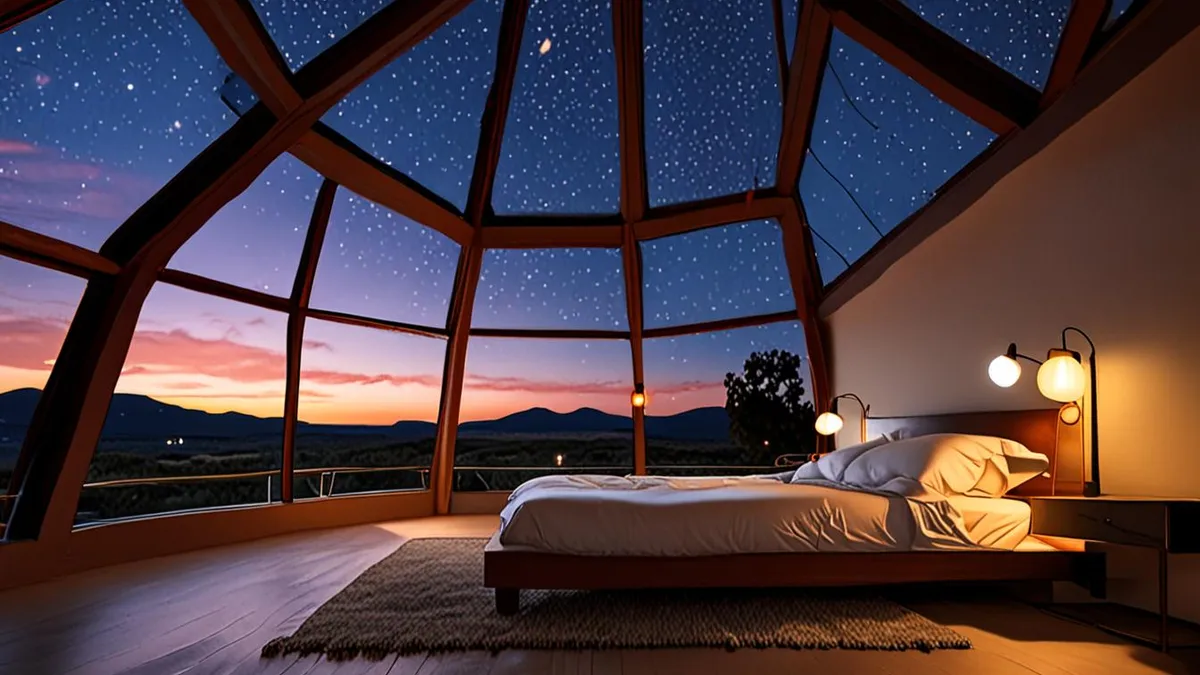
- Domes and yurts: geodesic domes with clear panels and Mongolian-style yurts with lattice walls and round skylights. Both shapes excel in cooler climates because they hold heat well, and both are popular with stargazers, since many feature transparent roof sections for lying in bed and watching the night sky.
- Treehouses, cabins and Airstreams: solid-walled options for travelers who want more weather protection and privacy. Treehouses add elevation and views, cabins offer the most insulation and quiet, and restored vintage Airstream trailers deliver a retro design experience, often on small, design-focused properties.
When choosing, think about climate first: canvas suits warm, dry seasons best, while domes, yurts and cabins handle cold and rain more comfortably. A well-run site will still heat or cool your unit, but insulation matters when temperatures swing between afternoon and midnight. Then think about atmosphere, because sleeping under canvas feels very different from sleeping behind a solid wall, even when both come with the same bed and bathroom. If you want the full sensory experience of the outdoors, choose fabric; if you want a quiet, weatherproof night with a view, choose something solid.
Finally, match the structure to your trip length. Most first-timers book 2-3 nights, which is enough to settle in and test a new format without a big commitment. Read recent reviews for the specifics that matter to the structure you are considering, especially how it performs in the season you plan to travel.
Where Glamping Shines: Settings and Destinations
One of the best things about glamping is that the accommodation can go almost anywhere a hotel can’t. Operators build their sites around scenery, so the setting is usually the main event, not an afterthought. Where you choose determines what your mornings, evenings and nights actually feel like.
Jungle settings are a favorite for good reason. You sleep under canvas with the rainforest humming around you, wake to birdsong and howler monkeys, and enjoy surprisingly cool nights under the canopy. Many sites add elevated walkways or viewing platforms, so wildlife spotting can start before breakfast.
Alpine meadows and remote coastlines deliver the opposite kind of thrill: wide-open drama. Think mountain silhouettes at sunrise or the sound of waves from your deck, often with no phone signal to distract you. If your goal is to truly switch off, these locations are hard to beat.
Then there are the destinations that stretch the concept entirely. Some properties take the “luxury stay in nature” idea into extreme climates, and you can sleep in style surrounded by Iceland’s icy landscapes without giving up warmth or comfort.
- Jungle sites: many offer guided dawn walks, since early morning is when rainforest wildlife is most active and easiest to spot.
- Alpine locations: higher elevations mean cooler nights even in summer, so sites often provide extra blankets or wood stoves.
- Remote coastal sites: expect tide-dependent activities like beach walks or boat trips, so check how the schedule shifts with the water.
- Ice lodges and similar concepts: these are often rebuilt each season and operate for a limited window, so availability is tighter than at standard tented camps.
How to Book Your First Glamping Trip
Glamping sites are usually small — a handful of tents or domes rather than hundreds of hotel rooms — which means the best properties fill up fast. A little planning goes a long way, especially if you have a specific destination or view in mind. Before you book, spend some time browsing photos and the site map if one is available, because the difference between a tent tucked in the trees and one facing an open field can shape your whole stay. Here’s how to approach your first booking.
- Book early for peak season. The most sought-after sites often sell out 3-6 months in advance, particularly for summer and holiday dates. If you want a specific tent or a deck with a view, reserving early is the only way to be sure of getting it.
- Aim for the shoulder season. Months like May-June or September-October typically bring lower rates and fewer crowds, while the weather is often still pleasant. It’s the sweet spot for value, especially at popular destinations.
- Keep your first stay short. A 2-3 night trip is the ideal test run. It’s long enough to settle in and enjoy the setting, but not a big commitment if you discover glamping isn’t for you.
- Read recent reviews carefully. Look for comments on the specifics that can make or break your stay: whether the heating works on cold nights, bathroom quality and privacy, noise between units, and what the food options are really like.
Once you’ve picked a site, don’t hesitate too long. Small properties can go from “available” to “booked out” in days during busy periods, and flexible cancellation policies make it easier to lock in a good date early and adjust later if plans change.
It also pays to contact the property directly before booking if you have questions. Owners of small glamping sites tend to be hands-on and happy to advise on which unit suits couples, families or travelers who run cold at night. Ask about what’s included in the rate, how meals work and whether activities need to be reserved ahead. A quick exchange of emails can save surprises on arrival and help you choose the tent, dome or cabin that best fits your trip.
What to Pack for Glamping
One of the joys of glamping is packing light — no tent, stove or sleeping bag required, since your accommodation comes fully equipped. But because you’re genuinely outdoors rather than inside a sealed hotel room, a few smart items make the difference between a cozy stay and a chilly or buggy one. Think of it as packing for a hotel that happens to sit in the middle of nature, where stepping outside means grass, gravel and night skies instead of a corridor.
The biggest surprise for first-timers is temperature. Canvas and tent-style structures heat up quickly in the afternoon sun and cool down fast after dark, so even in warm destinations you’ll want layers you can add or shed throughout the day. Many sites provide heating or extra blankets, but a warm layer for evening drinks on the deck is worth its weight in gold.
You’ll also be walking outside, often after dark. Paths between your tent and the main lodge, restaurant or bathroom block are frequently unlit — partly for atmosphere, partly to protect wildlife — so come prepared for uneven ground and real darkness. Pack a small day bag as well, since you’ll want hands free for meals, activities and toasting marshmallows.
- Layers, not bulk: pack a light fleece or sweater plus a warm outer layer, since the drop from daytime highs to nighttime lows can be dramatic even in summer.
- Closed-toe shoes with grip: flip-flops won’t cut it on gravel paths, wooden walkways or dewy grass in the early morning.
- A headlamp or torch: keep it by your bed for trips to the bathroom or lodge at night, when paths may have no lighting at all.
- Insect repellent: canvas walls and open-air decks mean you’re sharing space with the local bugs, especially near water or in the tropics.
- A light rain jacket: showers can roll in quickly, and in canvas accommodation you’ll likely walk outside to reach meals or activities regardless of the weather.
Is Glamping Right for You?
Glamping answers a simple problem: you want the stars, the fresh air and the sounds of nature, but not the mud, the mosquitoes or hauling a car full of gear. Instead of buying equipment and roughing it, you check into a property that hands you the outdoor experience on a plate, with the kind of nightly rate you’d expect at a small hotel rather than a campsite. You trade the discomfort and self-sufficiency of camping for comfort, service and design.
It suits first-time nature travelers, couples celebrating something special and anyone short on time or equipment. If you’ve tried it or you’re still on the fence, leave a comment or share this article with a friend who needs convincing.